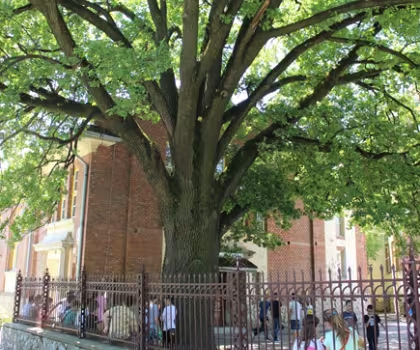
A Czech Scots pine has become the European Tree of the European Year
At times of democratic backsliding and the rise of populism, civil society organisations are important allies of the European institutions, as they play a vital role in the promotion and application of universal and European values.
A new study, commissioned by Civilisation coalition and Political Capital broughts more detailed, and in some way unexpected results. Although there are unclarities as to what civil society comprises of, more than one tenth of the respondents (or someone they directly know) has already received help from a civil society organisation (CSO). Conversely, many people are ready to help CSOs: every third respondent has already supported an organisation and 70 percent of people are willing to do so in the future.
The 2018 edition of the CSO Sustainability Index of Central and Eastern Europe and Eurasia was published by the United States International Development Office, USAID. The report is prepared in cooperation with local experts and organizations each year. In compiling the chapter on Hungary the Ökotárs Foundation was the partner of USAID again.
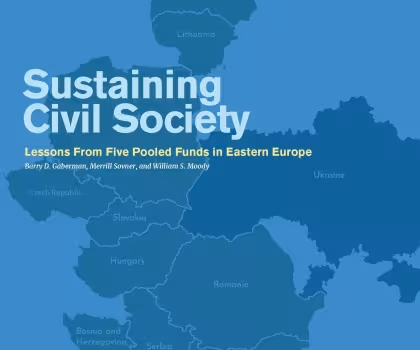
After 1990, US and European foundations and government agencies invested in a series of Partnerships and Trusts to support civil society in Central and Eastern Europe, the Baltics, the Balkans and the Black Sea regions. Analyzing the long-term impact of these investments is crucial, especially as many politicians across these regions increase their anti-civil society rhetoric. Three long-time US foundation staff look back at the legacy and impact of this funding and derive a series of lessons for practitioners seeking to understand how best to sustain civil societies for the long term.